
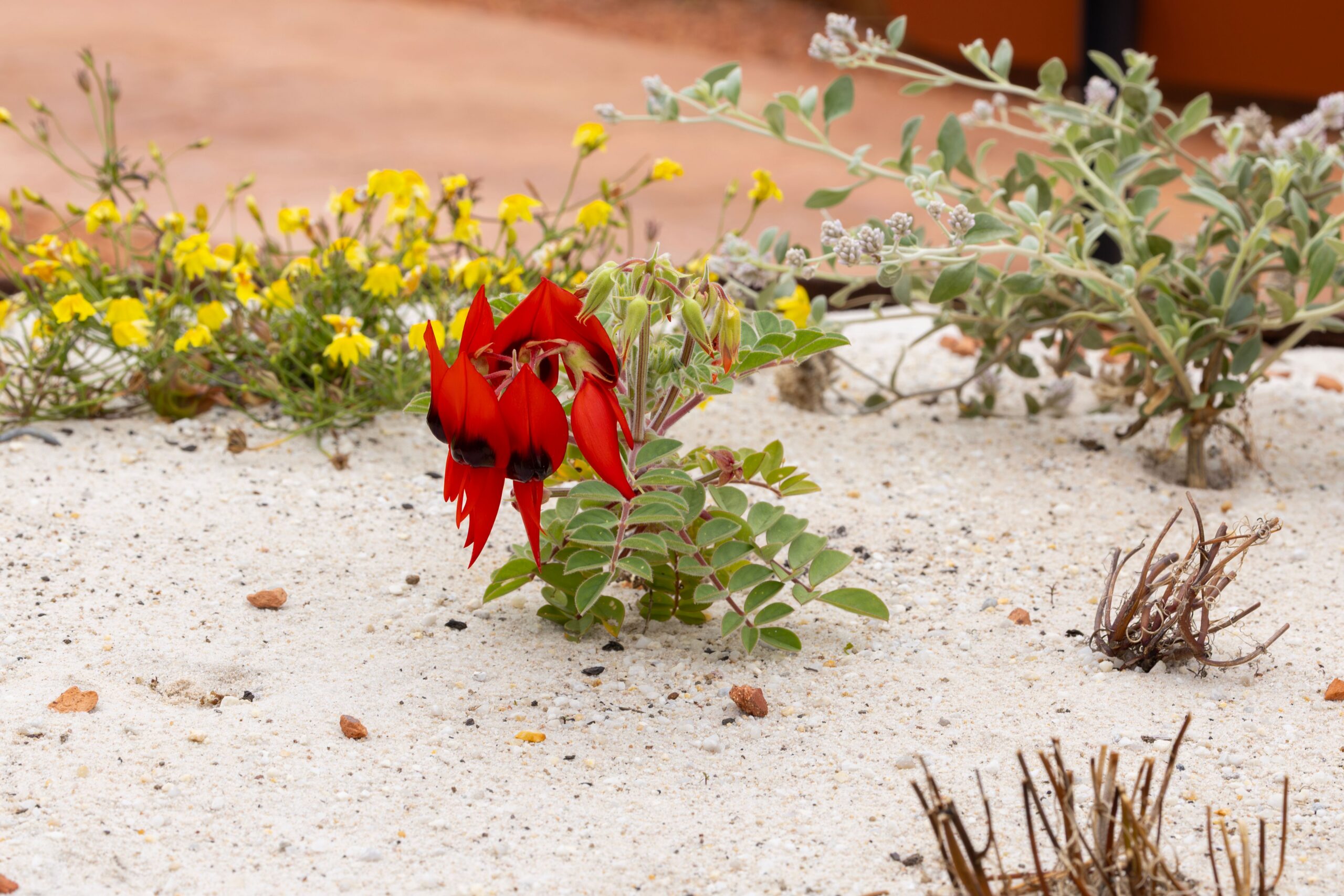
Perth homeowners have plenty of reasons to consider native plants when planning a new garden or refreshing an established one. Rather than relying on plants that need frequent watering and ongoing attention to cope with local conditions, well-chosen WA natives can create a garden that feels distinctly Western Australian while being practical to maintain.
Perth’s Mediterranean climate brings hot, dry summers, while sandy soils can make water retention and plant establishment more challenging. Choosing plants suited to these conditions can help reduce unnecessary water use and create a landscape that is better equipped to perform through the warmer months.
Good residential landscaping in Perth is about more than choosing attractive plants. Plant selection needs to work alongside the site’s conditions, irrigation, hardscaping and the way the outdoor space will actually be used. By combining horticultural knowledge with landscape design and construction, native planting can form part of a modern, considered garden that balances appearance, functionality and sustainability.
Why Choose Native WA Plants?
Choosing plants that are suited to Western Australian conditions can make a residential garden easier to manage while also helping it feel more connected to the surrounding environment. The key is choosing the right species for the site rather than assuming every native plant will suit every Perth garden.
Water Efficiency
Many native plants are well adapted to periods of dry weather and, once properly established, can require less supplementary watering than plants with higher water demands. For Perth homeowners, that can help reduce overall garden water use, particularly when planting is combined with efficient reticulation and plants with similar watering requirements are grouped together.
Lower-Maintenance Landscaping
Well-chosen native plants can also reduce some of the ongoing maintenance required to keep a garden healthy. Species suited to the local climate and soil conditions may require less intensive watering and feeding, although native gardens are not completely maintenance-free.
Even a lower-maintenance native garden still needs plants to be chosen with their mature size, position and ongoing pruning requirements in mind.
Supporting Local Biodiversity
Native planting can provide food, shelter and habitat for local wildlife. As part of its residential landscape construction approach, Waterwise considers plant selection alongside horticultural landscaping and irrigation, with thoughtful planting able to provide habitat for native birds and beneficial insects.
Colour, Texture and Year-Round Interest
A native garden doesn’t have to look sparse or like unmanaged bushland. By combining flowering plants, contrasting foliage, different heights and sculptural forms, homeowners can create a landscape with colour and texture throughout the year.
With the right combination, a native garden can feel distinctly Western Australian while still having a clean, contemporary design.
Top Native Picks for Your Perth Garden
There isn’t one native plant that will work in every backyard. Available space, sunlight, soil, exposure and what you want the planting to achieve should all influence your choices. With that in mind, these plants offer a useful starting point for different roles within a Perth residential landscape.
Feature Trees & Statement Plants

Silver Princess (Eucalyptus caesia subsp. magna) |

Red Flowering Gum (Corymbia ficifolia) |

Banksias |
| A distinctive WA native known for its pendulous branches, silvery foliage and large pink to red flowers. Growing into a small to medium tree, it can work particularly well as a feature where there is enough room for its weeping form to become part of the design. | Another Western Australian native valued for its colourful summer flowering. Flower colour can vary between seed-grown plants, while selected grafted forms are also available, including smaller-growing options that may be better suited to residential gardens with limited space. | Can introduce strong architectural forms as well as distinctive flower spikes to a native garden. Choosing the right species or cultivar matters because Banksias vary considerably in mature size. Compact forms can suit smaller gardens, while larger varieties can provide greater structure and become a focal point in the landscape. |
Screening & Privacy Plants

Woolly Bush (Adenanthos sericeus) |

Coastal Rosemary (Westringia fruticosa) |
| Has soft, silver-grey foliage and can reach around five metres high, making it useful where homeowners want an informal screen or hedge. It responds well to pruning and can grow in coastal sands as well as heavier, free-draining soils. Its small flowers also provide nectar for honeyeaters. | Isn’t native to WA, but this Australian native is well suited to exposed coastal conditions, making it a useful screening option for some Perth gardens. Its dense growth also lends itself well to screening and hedging. |
Colour, Groundcovers & Lower-Level Planting

Kangaroo Paw (Anigozanthos spp.) |

Snake Bush (Hemiandra pungens) |

Cushion Bush (Leucophyta brownii) |
| Can add upright form and vibrant seasonal colour between larger shrubs and groundcovers. The red and green Anigozanthos manglesii is Western Australia’s floral emblem and is naturally found across a broad area of the state’s south-west. Its flowers can also attract nectar-feeding birds such as honeyeaters. | A low, spreading WA native that can reach around three metres across while remaining close to the ground. Its purple, pink or white flowers appear through spring and summer, making it useful for adding colour across lower areas of a planting scheme. | Offers something different again, forming a compact mound of fine silver-grey foliage. Growing to around one metre high and wide, it can provide useful contrast against greener foliage and is particularly suited to coastal-style gardens and exposed positions. |
Designing With Purpose
Choosing the right plants is only part of creating a native garden that works well long term. How those plants are grouped, irrigated and incorporated into the wider landscape can have just as much impact on the finished result.
Group Plants With Similar Water Needs
Hydro-zoning simply means grouping plants with similar watering requirements together. This makes it easier to irrigate different parts of the garden appropriately rather than giving every plant the same amount of water.
For Perth gardens, this can help reduce unnecessary water use while giving newly planted areas the moisture they need to establish. Waterwise’s residential landscape design and construction process brings irrigation, horticultural landscaping and planting into the same project plan, allowing watering requirements to be considered alongside the wider garden design.
Use Mulch to Protect the Soil
Mulch can help reduce moisture loss from the soil, moderate soil temperatures and protect garden beds through Perth’s hot, dry conditions. It can also help suppress weeds and improve the overall presentation of a native planting scheme.
Make the Garden Feel Intentional
A native garden doesn’t have to look untamed. A well-designed residential landscape considers how different plant heights, colours, textures and mature sizes will work together as well as their relationship with paths, paving, entertaining areas and other built elements.
Planning the planting, irrigation, hardscaping and site preparation together can help the finished garden feel considered and contemporary rather than simply filling available garden beds.
Maintenance Tips for a Healthy Native Garden
Native plants can be relatively low maintenance once established, but young plants still need appropriate care while they settle in.
Water While Plants Establish
Even drought-tolerant natives need reliable moisture while their root systems establish. During the first 12 months, monitor soil moisture rather than assuming a newly planted native can cope without supplementary watering, particularly through its first Perth summer. How much water it needs will depend on the species, soil, weather and time of planting.
New gardens in WA may also be eligible for a temporary watering exemption while they establish. Outside an approved exemption, garden watering needs to follow the applicable WA watering rules.
Be Careful With Fertiliser
More fertiliser isn’t necessarily better for native plants. If feeding is required, choose a slow-release fertiliser formulated for Australian natives and follow the recommendations for the particular species.
This is especially important for phosphorus-sensitive plants such as many Banksias and other members of the Proteaceae family, which can be damaged by excessive phosphorus.
Prune With the Plant in Mind
Light pruning can help many native shrubs maintain a dense, compact shape and encourage new growth. For a number of flowering natives, pruning after flowering is appropriate, but it shouldn’t be treated as a universal rule for every species.
The best approach is to understand the natural growth habit of each plant and prune accordingly rather than forcing every native into the same shape.
Create a Native Garden That Works for Your Perth Home
A well-planned native garden can do far more than reduce water use. The right mix of plants can add colour, texture, privacy and habitat while helping your outdoor areas feel more connected to the Western Australian landscape. When plant selection, irrigation and site conditions are considered together, native planting can also support a lower-maintenance garden that performs better over time.
Creating that kind of result starts with a clear plan. Founded in 2007, Waterwise brings landscape design, horticultural expertise and construction capability together for residential projects, with an in-house Landscape Architect as part of the team.
Planning a new garden or transforming an existing outdoor space? Find out how native planting can form part of your residential landscaping in Perth and contact Waterwise Landscaping for a free quote.